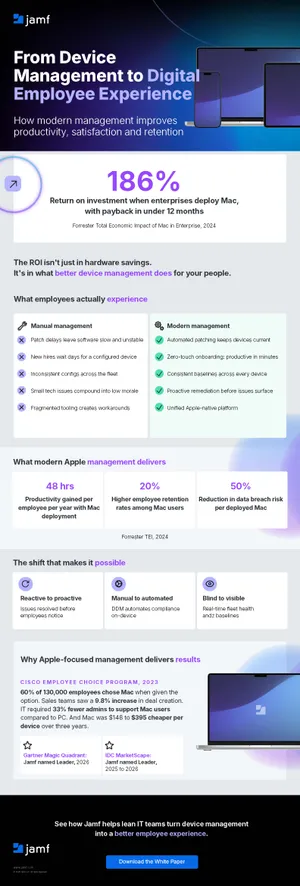
The hidden productivity cost of everyday technology friction
Small tech interruptions like slow apps and device issues quietly compound into a real productivity and IT workload problem for growing organizations.

The technology problems that don't look expensive
Friction doesn’t have to be a total outage to represent meaningful impact to an organization. It's the accumulation of minor interruptions and endless workarounds that ultimately lead to delays.
They may appear insignificant at the employee level, but zoom out and you’ll find hundreds of employees experiencing many “moments” all day long. As they multiply, it compounds weekly and so on until a pattern emerges, which is hard to spot but difficult to ignore once the financial impact from lost productivity has surfaced.
The first step toward reducing friction for growing organizations running lean IT teams is understanding where it hides.
Small interruptions don't stay small at scale
Waiting a few extra seconds for an application to load or losing a couple of minutes during device restarts is a natural part of using technology. But when you add up all the interruptions that occur to employees across an organization, the accumulation of “time lost” tells a different story regarding the impact to digital work.
According to Microsoft's 2025 Work Trend Index, employees are interrupted an average of 275 times by meetings, emails or chats every day. And while digital friction certainly plays a large role in this, not all interruptions come from devices or apps. Microsoft found that they occur “once every 2 minutes during core work hours.” This finding supports the statement: what looks like a minor inconvenience adds up to a meaningful drag on focus and output across the workforce.
The same friction creates work on both sides of the help desk
It’s important to note that not all interruptions are created equal. Technology friction differs from workplace distractions because the former costs both the individual contributor and IT.
For example, employees that can’t access an app or a kernel panic that presents after an update typically require an IT request to resolve. There’s a “double toll” effect: the employees can’t do their work, and IT is tasked with resolving the issue.
That's real capacity spent on a problem that, individually, looked too small to matter.
For lean, mid-market IT teams supporting growing Apple environments, this double effect is especially costly because it pulls IT away from higher-value work to address common issues like:
- Recurring device problems
- Repeated access requests
- Avoidable troubleshooting sessions
When multiplied across device fleets of hundreds or thousands of Mac, iPhone and iPad devices, what looked like isolated incidents from close-up, resemble a consistent drain on IT capacity.
Where everyday technology friction shows up
Onboarding and device readiness
New employees waiting for a properly configured device or the right app access before they can start working
Application and access availability
Login issues, permission gaps and/or software that simply isn't ready when it's needed
Device performance and reliability
Slow devices, storage issues or unexpected errors that interrupt routine tasks
Updates and patching
Required (but disruptive) processes that interrupt active work or are missed when cancelled, introducing risk
Routine requests that require IT
Simple needs, like a password reset or software install, that require IT intervention
Firefighting approach to IT
Jumping from issue to issue as employees report them instead of being caught before they cause disruptions
Friction: from reacting to reducing
Each of the everchanging points in the previous section are something that IT is responsible for managing and securing. Unfortunately, many IT teams operate by responding to technology issues after they’ve been reported.
The value proposition is to proactively identify pain points, presenting the opportunity for lean teams to reduce overall friction and administrative overhead by shifting away from reactive approaches.
5 proactive management practices that enable this shift:
1. Integrate management, identity and security tools.
Provision centralized, seamless access to resources across fleets
2. Visibility into device health and status
Gives IT insight into what’s happening across the fleet in real-time
3. Automate patch and configuration deployments.
Removes common tasks from IT's plate while enforcing compliance
4. Standardize workflows through Self Service+.
Empowers employees by allowing them to resolve issues without waiting on IT
5. Enforce AI governance alongside IT compliance.
Secure organizational data and endpoints from misuse or risk factors practically.
While some degree of workplace interruption will always exist, there’s a difference between a team that only reacts to friction and IT that reduces friction by proactively managing their environments.
Turning individual frustrations into something IT can act on
Management practices only address the problem from a technical viewpoint, but DEX identifies gap from the user’s perspective.
What is DEX?
The Digital Employee Experience (DEX) examines how employees interact with devices, apps and services. Its chief aim is to measure how well users engage with those tools and how seamlessly workflows enable productivity.
Why is DEX crucial?
It examines the relationship between employees and technology, like:
- Onboarding: How long does it take a device to be employee-ready?
- Performance: Which devices are operating consistently across the fleet?
- Satisfaction: What do employees feel about the tools they use for work?
- Operations: Do recurring support loads generate more IT requests?
How does DEX reduce friction?
When combined with a comprehensive IT strategy, data gleaned from DEX helps IT develop custom solutions to address gaps between employees and technology use as they surface.
The key is for organizations to view technology use through an operational lens that, when combined with DEX, connects moments of friction to patterns that IT can identify, prioritize and address. The result ensures employees know when and how to use technology efficiently — which is critical within growing Apple environments where device usage often expands faster than the team supporting it.
Reducing the friction you can't afford to ignore
Digital friction’s easy to overlook because it’s often too small to matter to the individual employee. Across a growing workforce however, even the smallest interruptions aren’t often isolated to just one user.
Identifying where friction appears and understanding how it affects the organization are essential steps toward shifting IT’s dynamic to a proactive approach and reducing its cumulative impact.
Explore how modern Apple management can help reduce everyday technology friction and support a more productive, scalable employee experience.